
Blackburn Rovers are mourning the death of former winger and striker Peter Dobing, who has passed away at the age of 87. Dobing made more than 200 appearances for the club and scored over a century of goals during a key period in the late 1950s and early 1960s.
He signed professionally with Rovers as a 16-year-old and made his debut at 17. The season after his debut, he scored 20 league goals as Blackburn earned promotion from the Second Division. He followed that with 26 goals in the top flight the next year. Dobing also scored in the 1959/60 FA Cup final, where Rovers were beaten by Wolverhampton Wanderers at Wembley.
A prolific Rovers career
His most productive scoring period came in the 1960/61 season when he netted 22 times, reaching a century of goals for Rovers in all competitions. He became the youngest player to make 200 appearances for the club at the age of 22 and earned eight caps for England under-23s during his time at Ewood Park.
Dobing's time at Blackburn ended when he signed for Manchester City in a transfer at the close of the 1960/61 season. After two years there, he moved to Stoke City for a then-club record fee. He spent a decade at Stoke, making over 300 appearances and captaining the side to their first major trophy, the League Cup, in 1972. A broken leg a year later ended his playing career, which totalled 684 appearances and 238 goals. After football, he worked in the pottery industry in Staffordshire and was known as 'the pipe-smoking gentleman of English football'.
Stoke City said in a statement: "The thoughts and sincere condolences of all at Stoke City are with Peter's friends and family at this immensely difficult time."
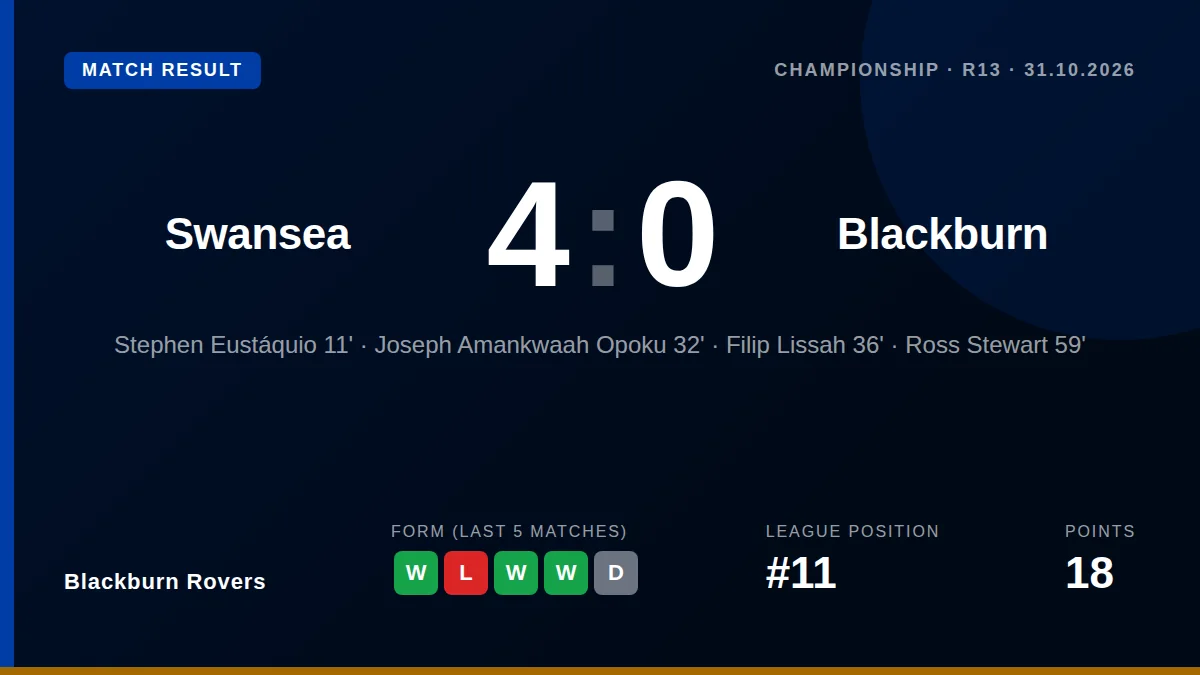
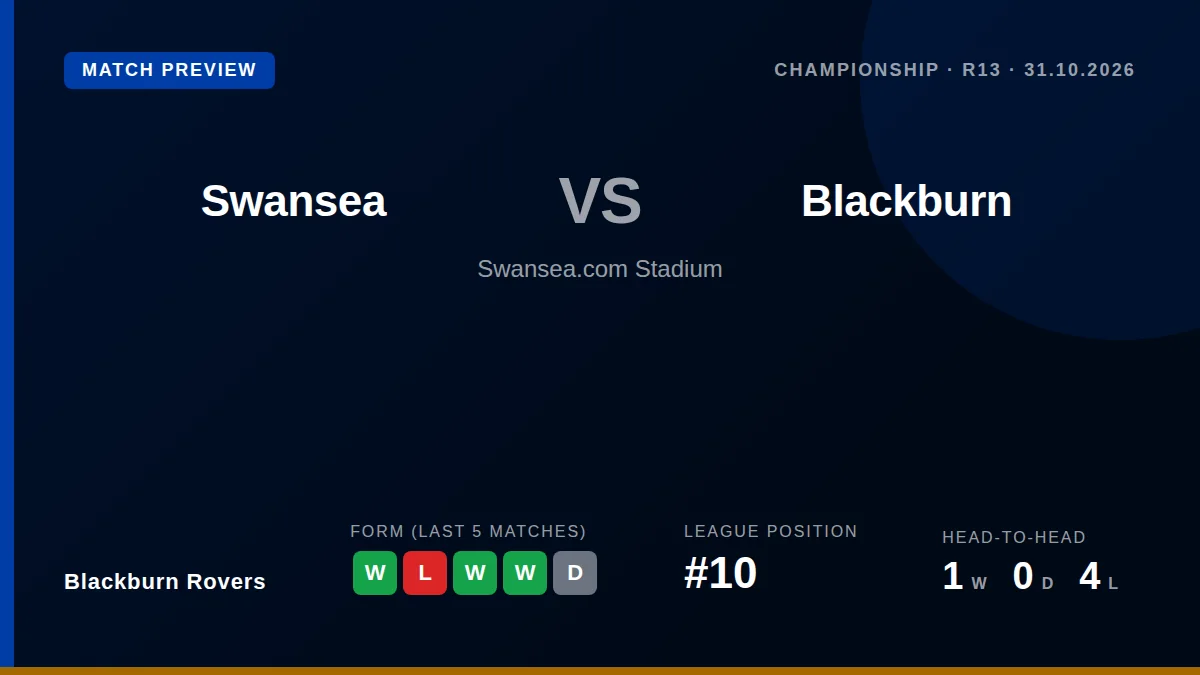
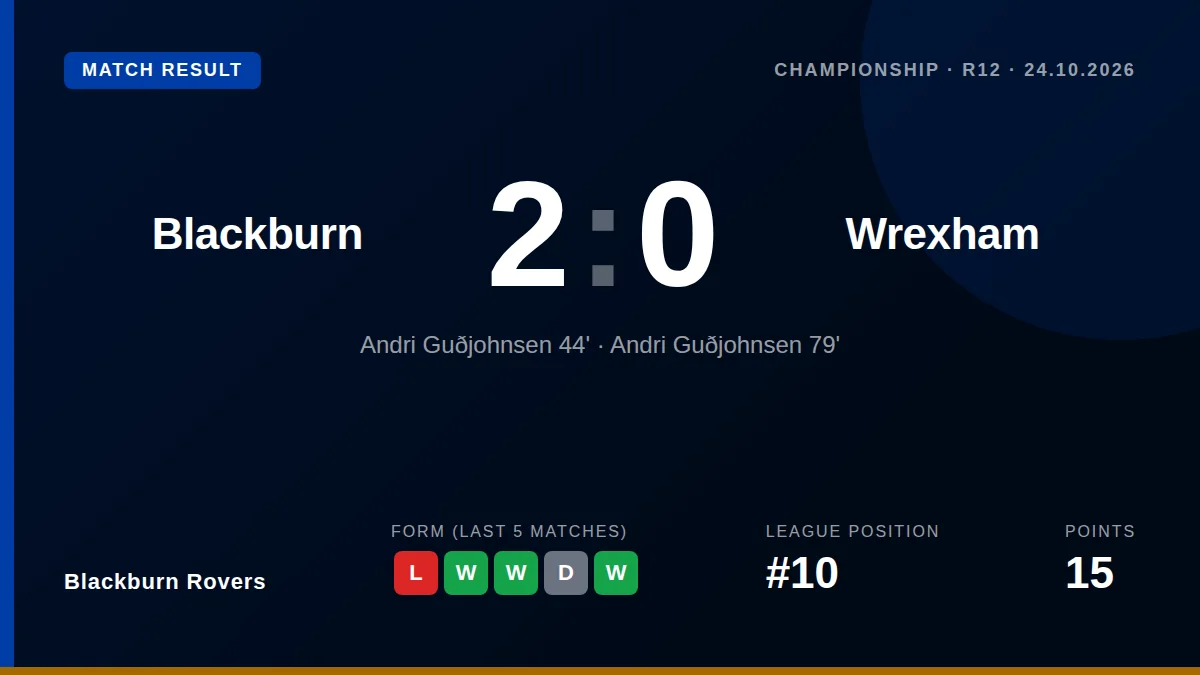
The news comes as the current Blackburn Rovers side prepare for their next fixtures. They face Swansea City away on 31 October, looking to build on a recent run of three wins, one draw and one defeat. The club's modern-day attack is led by A. Guðjohnsen, who has eight goals this season, echoing the prolific form Dobing showed for Rovers generations ago.
Further reading: Lancashire Telegraph